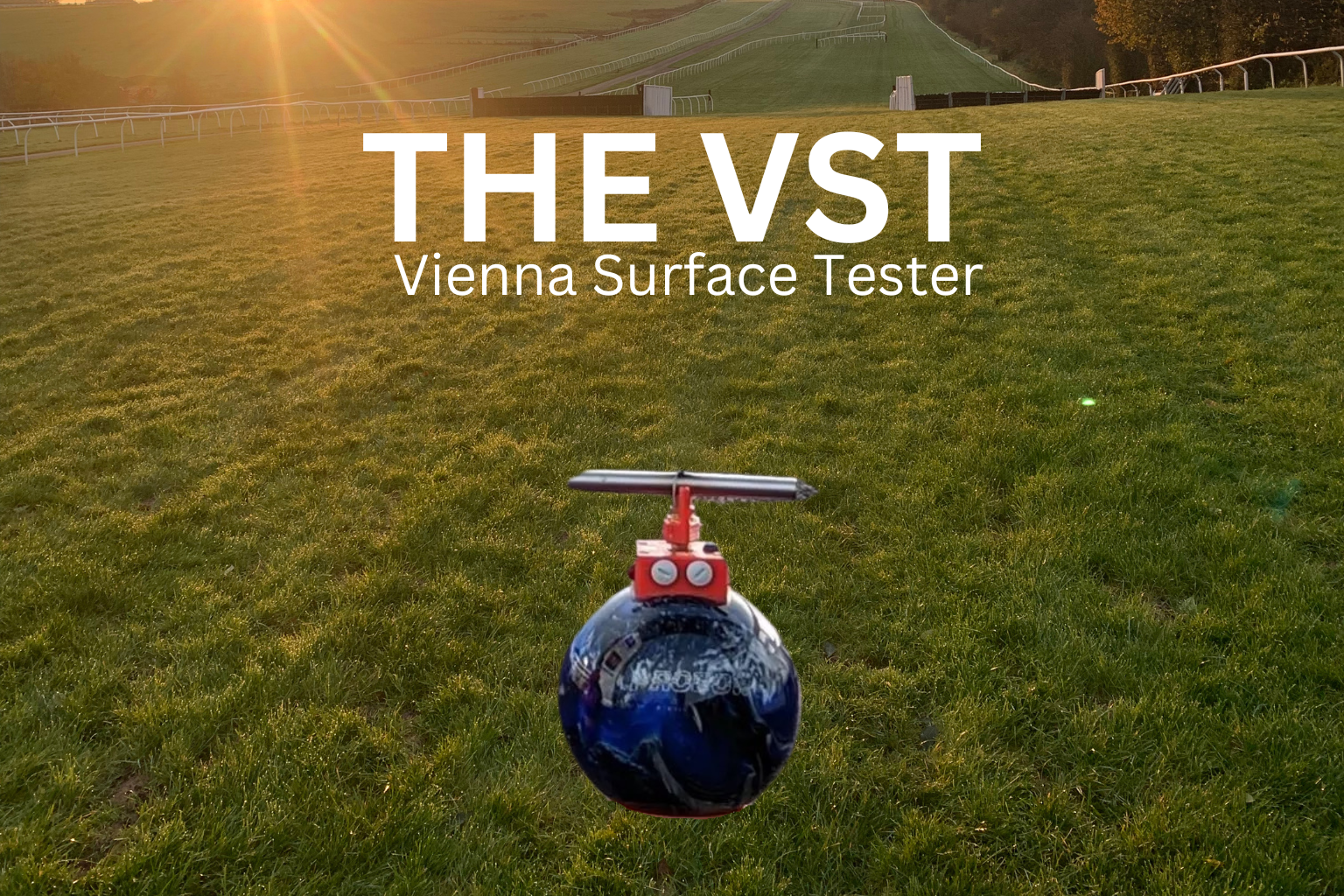
The Vienna Surface Tester (VST) is an advanced surface testing device designed to measure track conditions by simulating the forces of racing.
Validated against the OBST* (the gold standard for pre-meet inspections of racetracks in the USA), the VST offers a more detailed, multilayer assessment of the track than traditional methods that only measure the surface layer.
The VST produces consistent data independent of user, enabling informed decision-making that supports track performance, safety and maintenance needs.
*OBST -ORONO BIOMECHANICAL SURFACE TESTER
Have you ever wondered if the track we walk on, or walk with a walking stick, is the same ground that horses experience?
While we may feel the surface underfoot, the reality is that horses experience both the top and lower layers of the track due to their weight, speed and the forces they exert. Their impact on the surface is much greater and deeper than ours, as they generate more pressure and move faster. This is particularly important on different surface types, such as sandy, clay or loamy tracks, as each type reacts differently to the horse’s movement, affecting traction, stability and performance.
Key Features
Supports Decision-Making:
The VST helps you make informed decisions about track
maintenance and safety by providing consistent, reliable data.
Replicates Racing Forces:
It closely simulates the forces involved in racing, offering a detailed
picture of how the track behaves under real world conditions.
Complimentary or Alternative to Traditional
Assessments:
The VST offers a different way of assessing the going, providing enhanced data that goes beyond traditional methods. It helps you identify trends and different levels within each going bracket, giving you a deeper understanding of track conditions.
Long-Term Monitoring:
By tracking surface conditions over time, the VST helps identify potential issues like drainage problems or surface wear before they become costly or dangerous. It also aids in managing resources, such as water and heavy machinery usage, allowing you to measure their impact and make informed maintenance decisions to help you achieve and maintain optimal ground conditions.
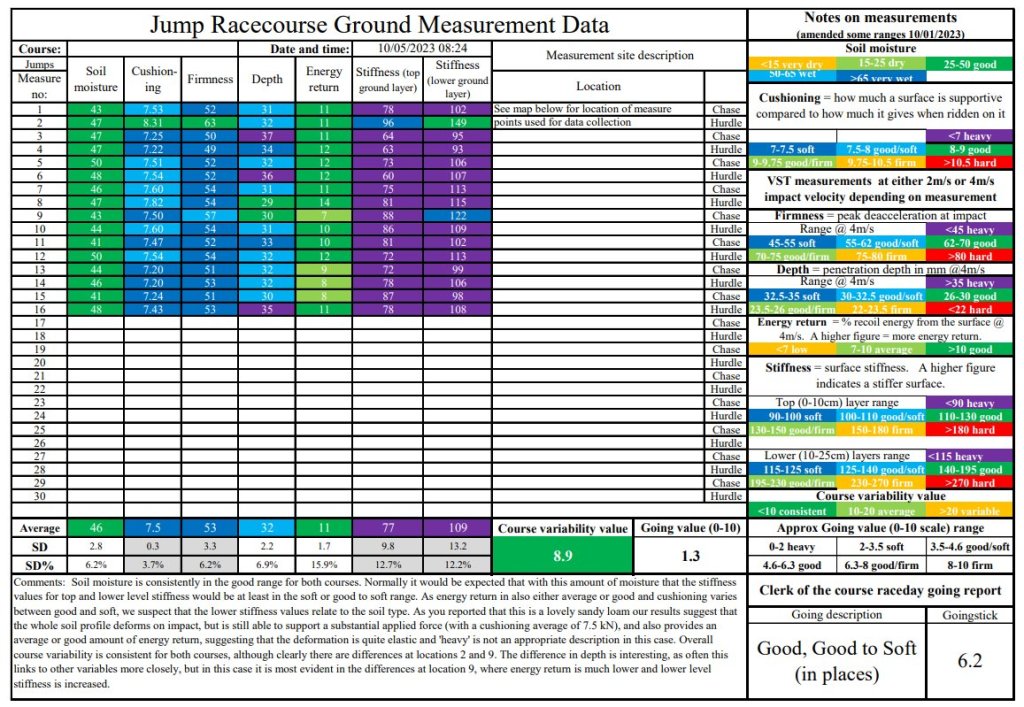
Usefulness
of the data:
Firmness (g):
Measures: Surface hardness (peak acceleration at impact). Influences top surface stability and grip. Too High →increased impact shock, Too Low → increased deformation, slip
Moisture (%):
Measures: Water content in the top surface layer. Too high → soft, slippery conditions, increased top surface damage, poor root growth, Too Low → increased firmness and impact shock.
Cushioning (kN):
Measures: Force absorption capacity (peak force). Too high → high peak forces (fast speeds), increased stress and risk of tissue overload, Too low → insufficient support, risk of fatigue and reduced performance.
Variability (%):
Measures: Consistency across track sections. Too Variable → Uneven surfaces, localised wear/damage, inconsistent performance, increased injury risk.
Global Adoption and Research
The VST is already being used in multiple countries for research purposes, adapting the technology to various international racing standards. It has recently been adopted by Racing Surfaces Testing Laboratory for U.S. pre-meeting turf track testing to ensure optimal pre-race ground preparation, working towards a new standard for turf track maintenance.
 groundlytics.com